Laurus nobilis
Bay Laurel
Light
Full sun
Origin
Mediterranean Region
Watering
Drought tolerant
A classic Mediterranean shrub cultivated for centuries for its ornamental, dark green glossy leaves — equally valued in the kitchen and the garden. It can be clipped into topiary or left to grow freely as a privacy screen.
Bay laurel is one of the most historically significant Mediterranean plants, native to the region and associated with classical antiquity — its wreaths crowned poets and victors in ancient Greece and Rome. The aromatic dark green leathery leaves are evergreen and used fresh or dried as a culinary herb; small inconspicuous yellow flowers appear in spring on female plants, followed by glossy black berries. Active growth occurs in spring and autumn; growth slows in summer heat and stops below 5°C. Hardy to -8°C in established specimens, the tree is drought-tolerant once rooted, salt-tolerant and remarkably tolerant of severe pruning — qualities that make it the dominant evergreen for clipped Mediterranean topiary.
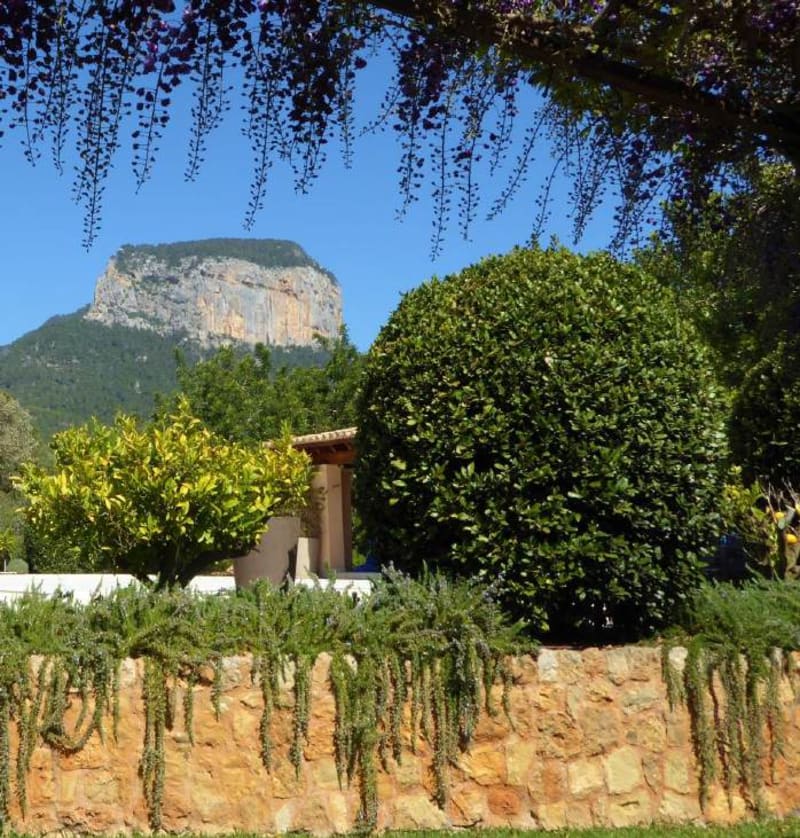
Allowed to grow naturally, bay laurel becomes a multi-stemmed tree 8–15 m tall; clipped, it forms perfect domes, pyramids, lollipops and tall hedges at any size between 1 and 6 m. Plant clipped specimens in pairs flanking doorways and gateways; in regular rhythms as topiary cones along driveways and terraces; or as a tall dense hedge to define rooms within a Mediterranean garden. Pair with terracotta pots, white-stuccoed walls and the silver-grey of Olea europaea for the classic Italian formal garden palette. Excellent in large terracotta containers on terraces, where the aromatic leaves can be harvested for cooking. Avoid wet heavy soils — the tree resents winter waterlogging.
Our Mediterranean projects
All Projects →
Garden Redesign
Rose Garden Reconstruction for a Monastery-Style Hotel, Peloponnese
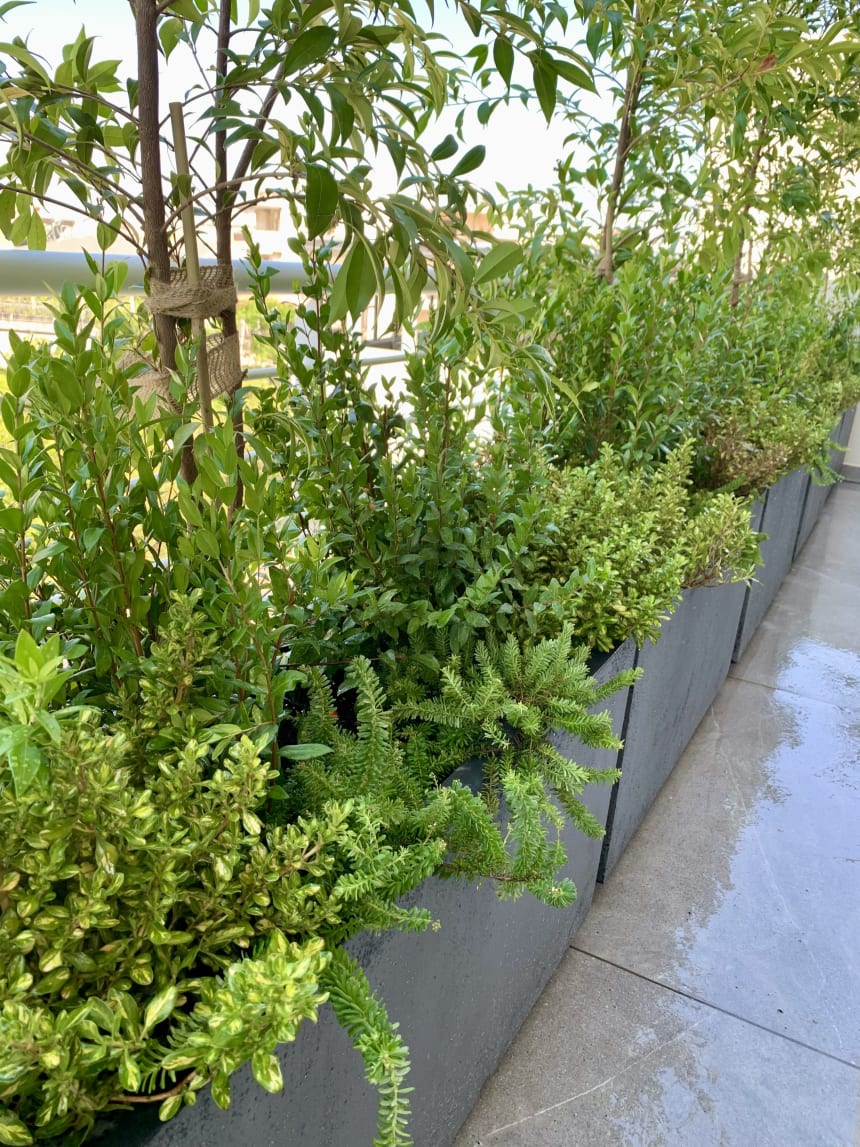
Container Gardens
Office Garden. Glyfada, Athens

The Ideal Garden
Part of a Four-Level Planting Design Project for a Townhouse in Kifisia
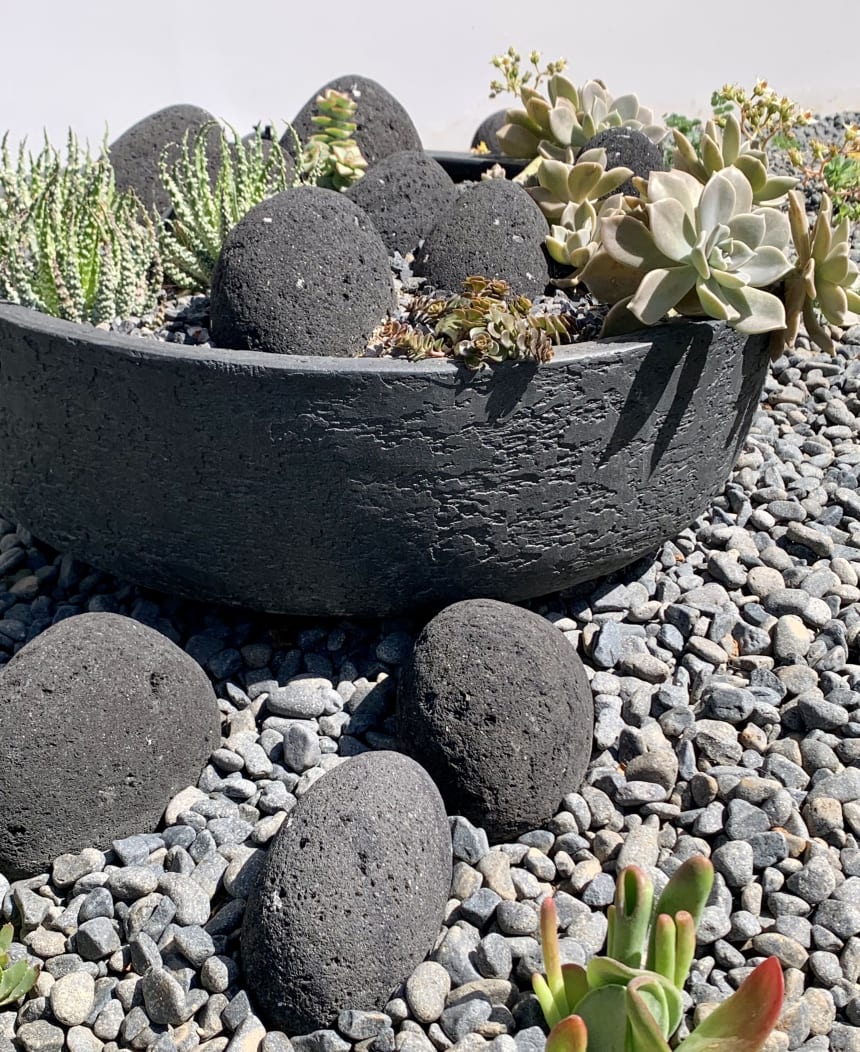
The Ideal Garden
Part of the "Family Garden in Glyfada" Project. The Stone Garden

Garden Redesign
A Small Garden Without Borders in Marousi, 1.5 Years Later
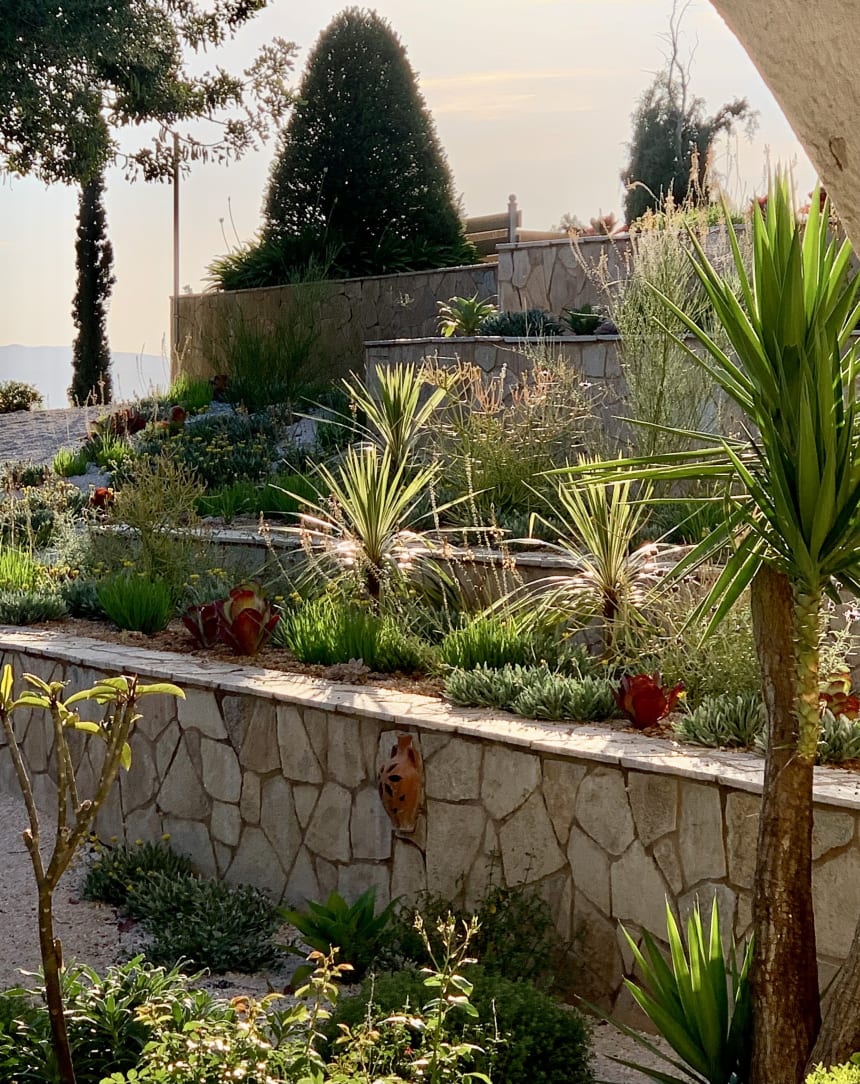
Garden Redesign
A Garden in an Olive Grove. Kalamata

Garden Redesign
Family garden in Glyfada. Project realization.
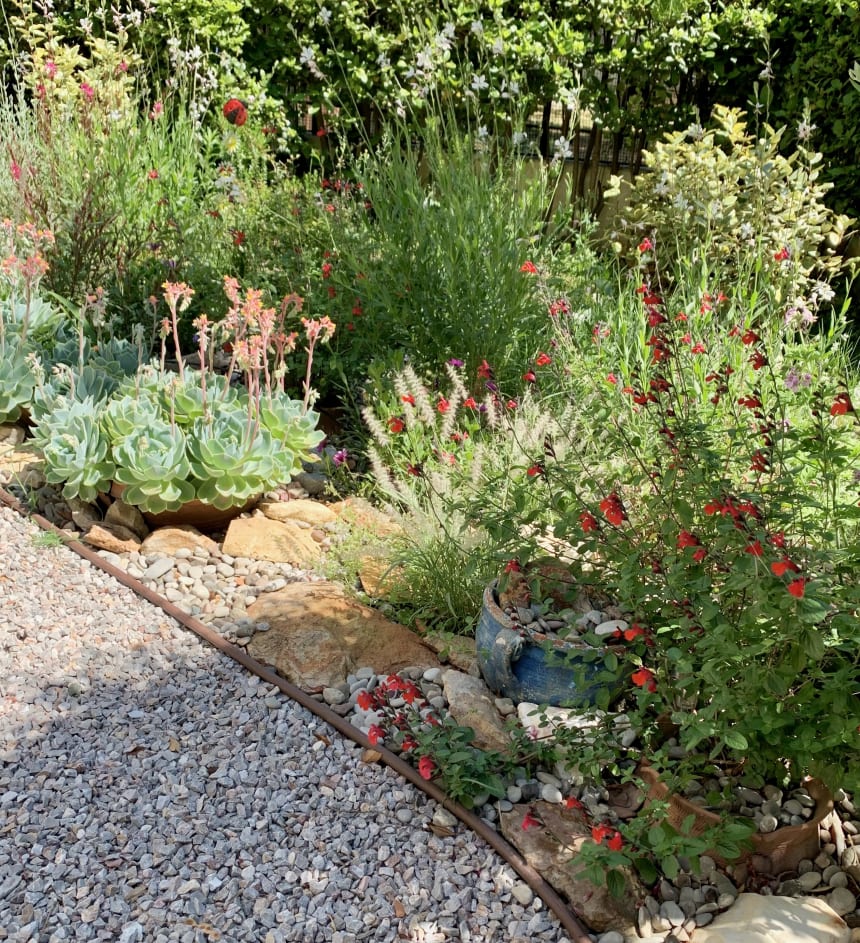
Garden Redesign
A Small Garden Without Borders in Marousi

Container Gardens
Part of a Four-Level Planting Design Project for a Townhouse, Kifisia

Container Gardens
Balcony in Kallithea
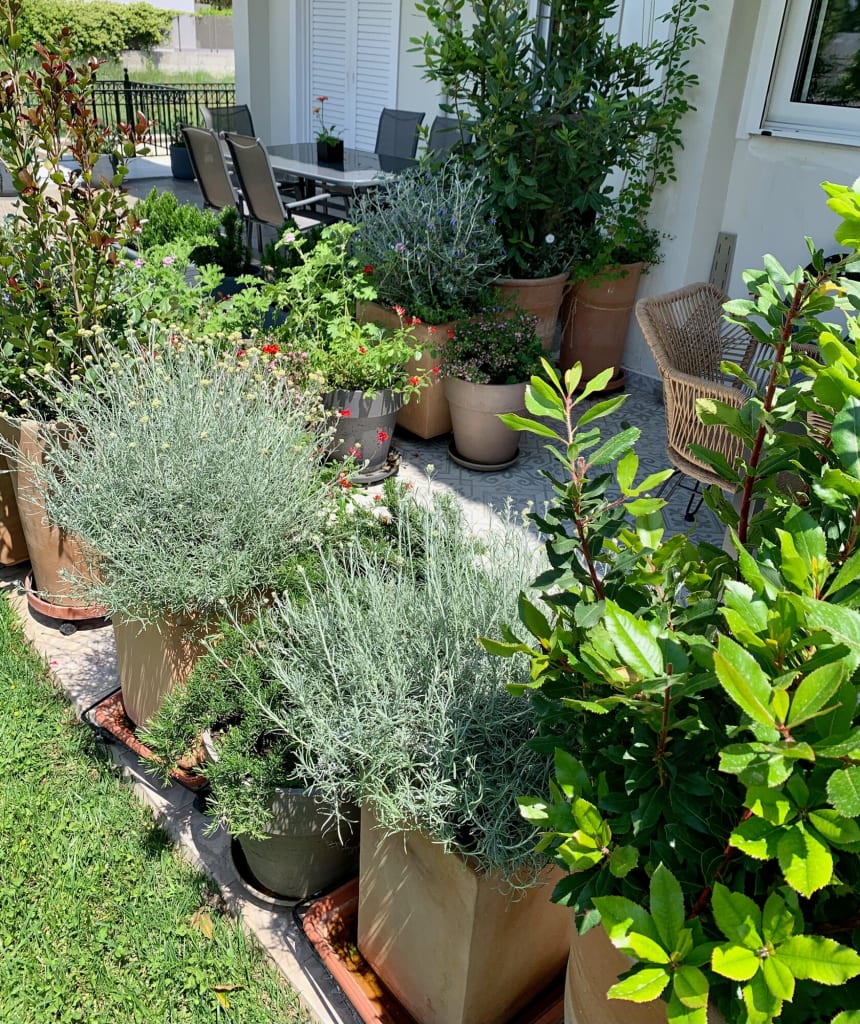
Container Gardens
Container Garden for a Townhouse in Kifisia

Container Gardens
Container Relaxation Garden in Nea Erythraia

Container Gardens
Container Landscaping of a Shaded Terrace for a Hotel in Alimos

Container Gardens
Container Landscaping for an Outdoor Restaurant Terrace on the Waterfront in Aigio
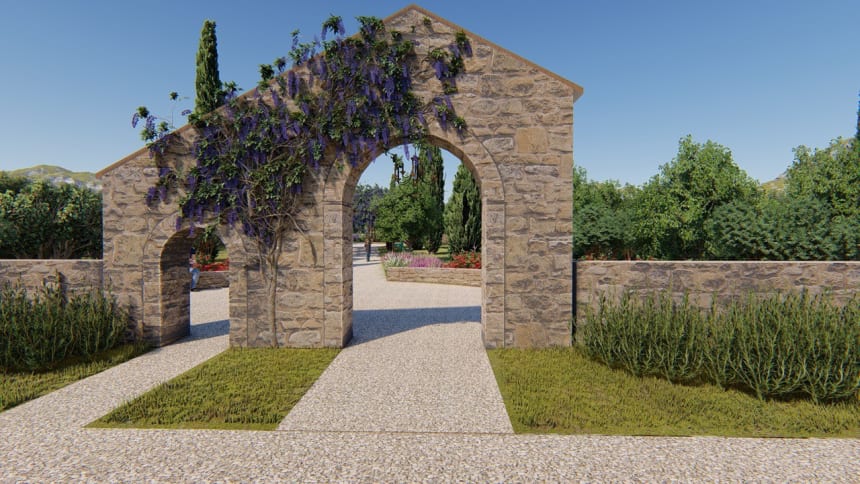
The Ideal Garden
Eco-Park in the Citrus Grove of a Peloponnese Hotel
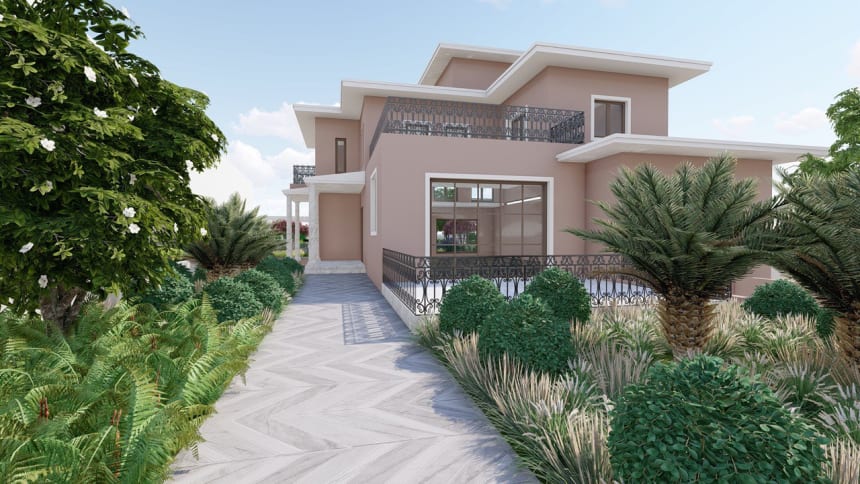
Garden Redesign
Family Garden in Glyfada

The Ideal Garden
Planting Design for a Private Boutique Hotel

Container Gardens


