Bougainvillea spp.
Bougainvillea
Light
Full sun
Origin
Brazil, Peru and Argentina
Watering
Drought tolerant
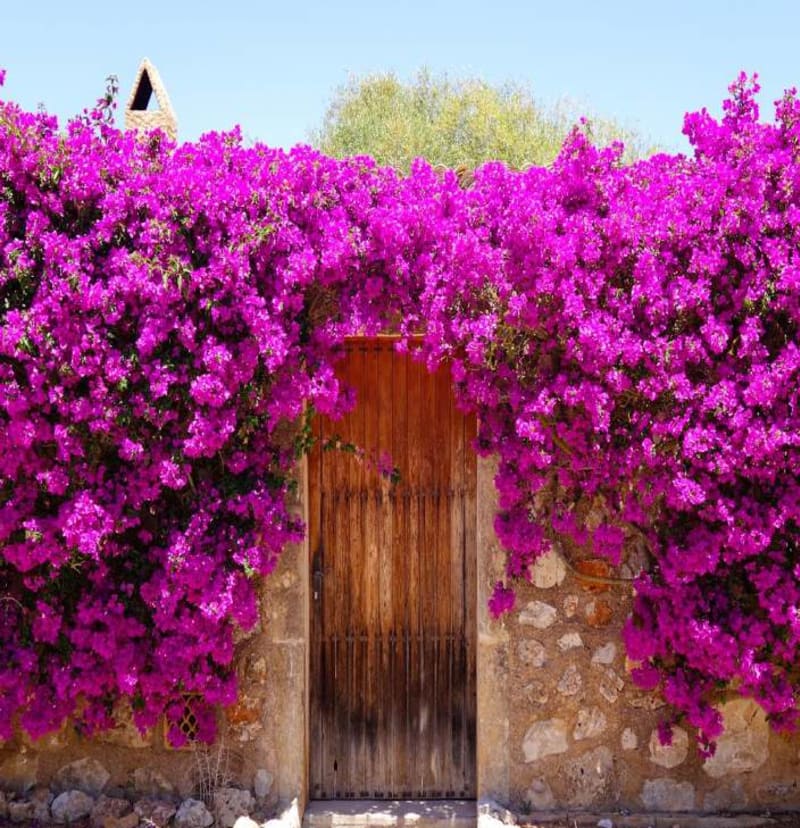
A classic Mediterranean climber, bougainvillea blooms nearly year-round in vivid shades of pink, purple, red, orange, white and yellow. Its bright bracts create dramatic impact cascading over stone walls and pergolas.
Bougainvillea is one of the defining plants of Mediterranean architecture, flowering profusely from late spring through autumn — and in mild coastal microclimates, almost year-round. What appears to be flowers are in fact papery bracts in magenta, purple, orange, red, pink, white or apricot, surrounding tiny tubular true flowers. The plant becomes drought-dormant in cool wet winters and is damaged below -2°C, recovering quickly from frost on established specimens. It tolerates salt spray, poor soils and reflected heat from walls and paving; flowering is most intense when growth is stressed by drought and bright light.
A vigorous climber reaching 3–10 m, Bougainvillea is grown against sun-baked walls, over pergolas, along boundary walls and as flowering hedges where space allows. It needs strong support — wire or trellis — and benefits from hard pruning in late winter to control size and concentrate flowering on new wood. Classic Mediterranean compositions pair magenta Bougainvillea with white-washed walls, sky-blue Plumbago, terracotta pots of Lavandula and the dark glossy foliage of Citrus and Laurus nobilis. Multi-coloured grafted specimens are dramatic in large pots flanking entrances; trailing varieties work well cascading from raised planters and retaining walls.
Our Mediterranean projects
All Projects →
Garden Redesign
Rose Garden Reconstruction for a Monastery-Style Hotel, Peloponnese
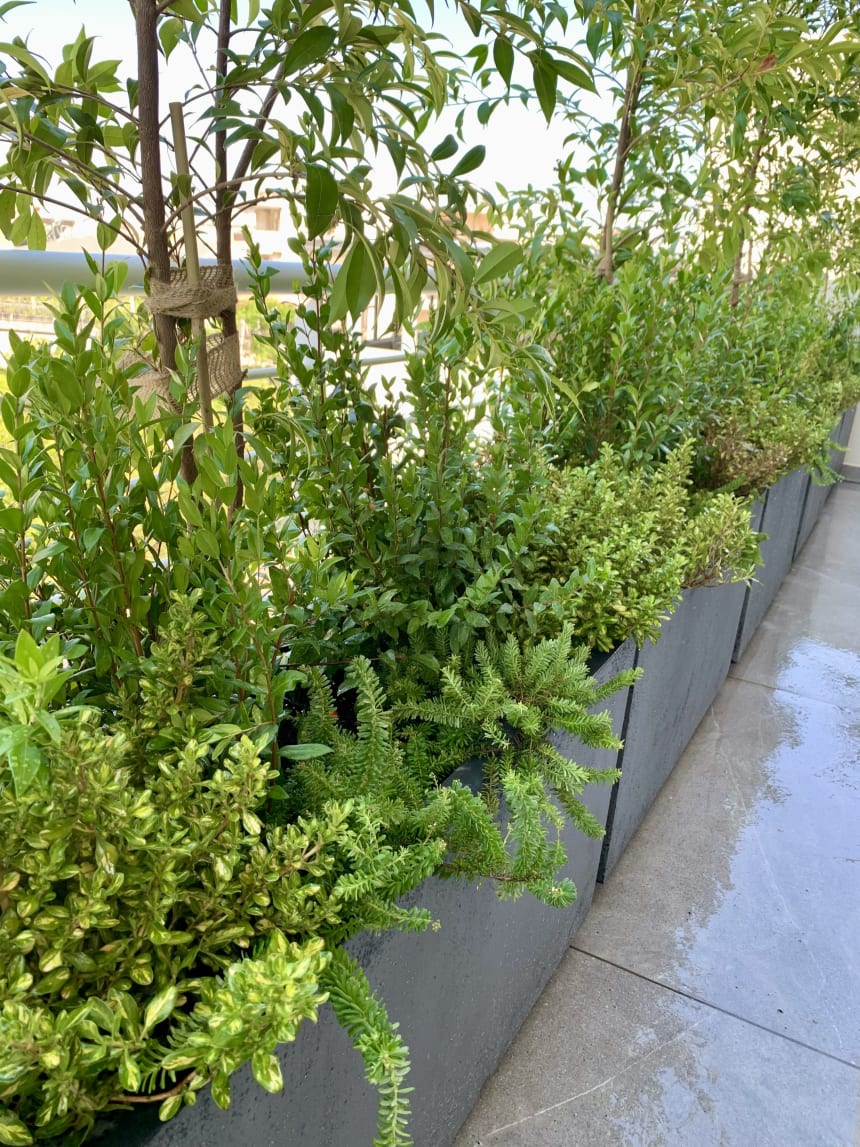
Container Gardens
Office Garden. Glyfada, Athens

The Ideal Garden
Part of a Four-Level Planting Design Project for a Townhouse in Kifisia
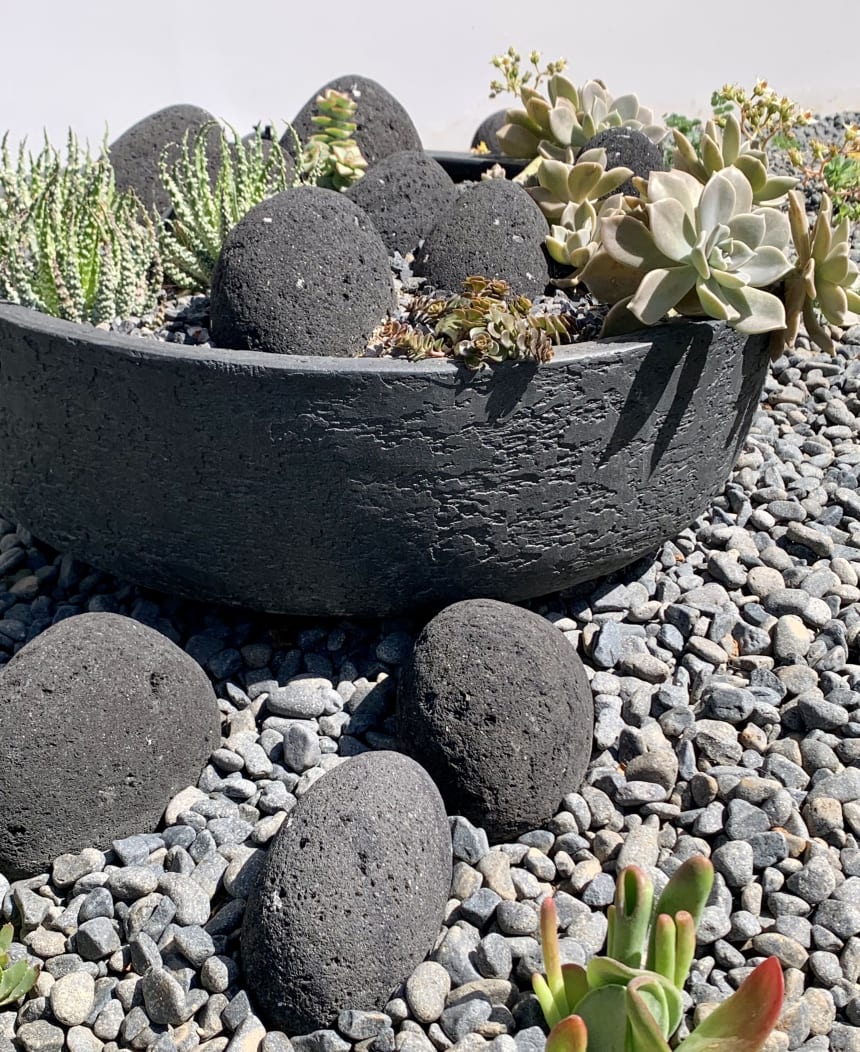
The Ideal Garden
Part of the "Family Garden in Glyfada" Project. The Stone Garden

Garden Redesign
A Small Garden Without Borders in Marousi, 1.5 Years Later
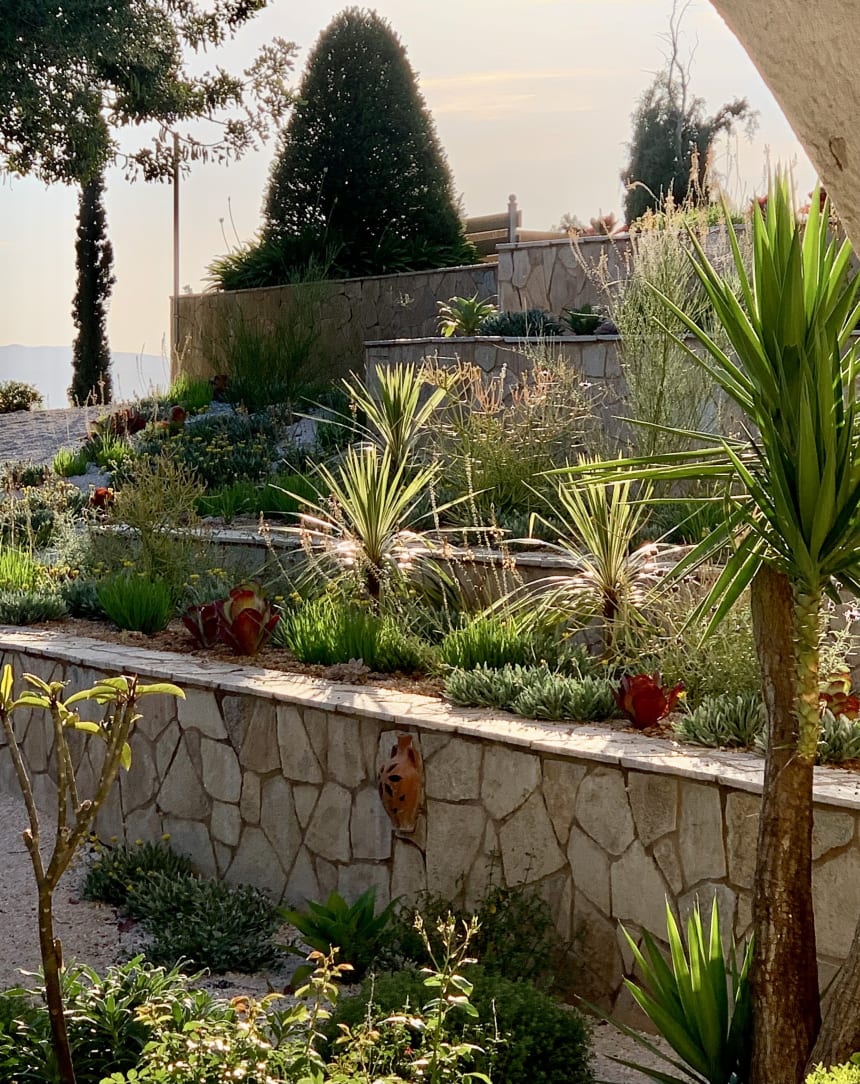
Garden Redesign
A Garden in an Olive Grove. Kalamata

Garden Redesign
Family garden in Glyfada. Project realization.
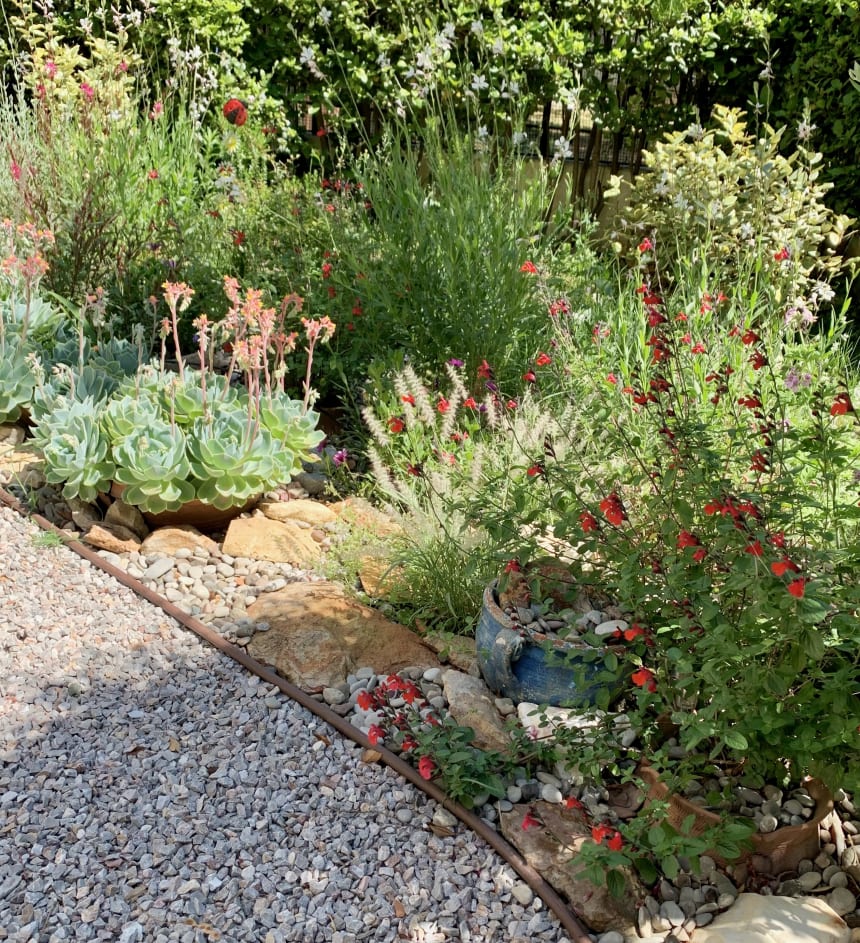
Garden Redesign
A Small Garden Without Borders in Marousi

Container Gardens
Part of a Four-Level Planting Design Project for a Townhouse, Kifisia

Container Gardens
Balcony in Kallithea
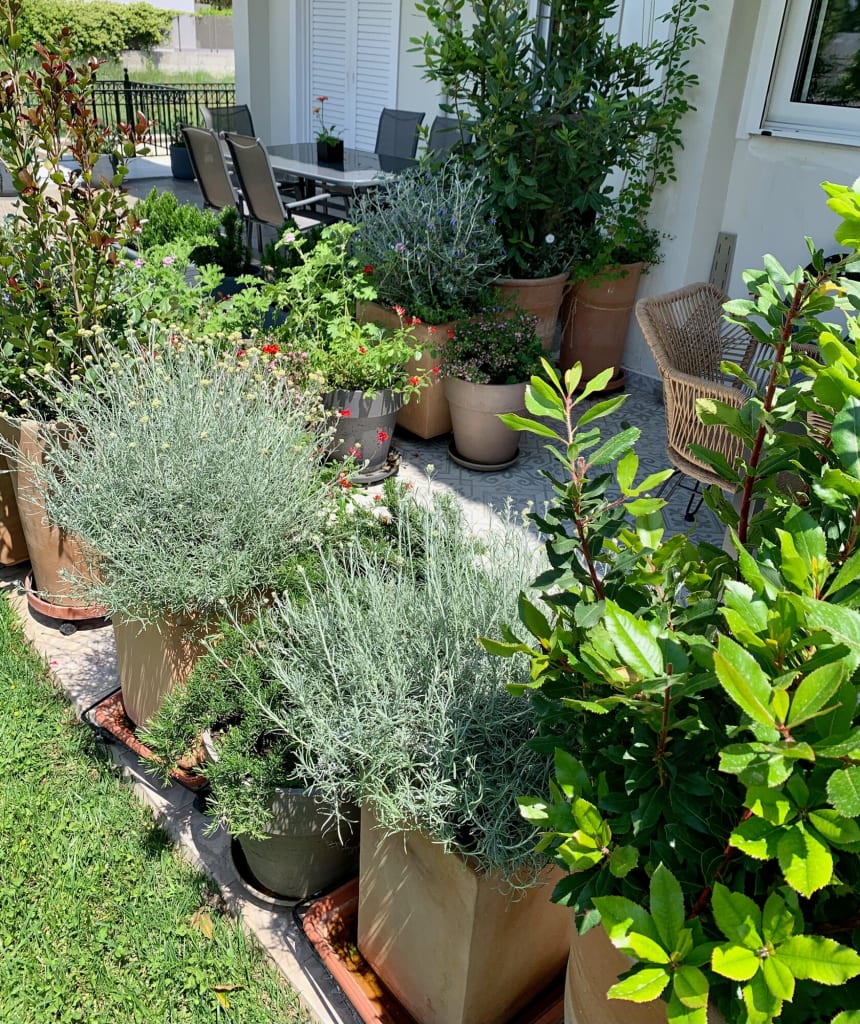
Container Gardens
Container Garden for a Townhouse in Kifisia

Container Gardens
Container Relaxation Garden in Nea Erythraia

Container Gardens
Container Landscaping of a Shaded Terrace for a Hotel in Alimos

Container Gardens
Container Landscaping for an Outdoor Restaurant Terrace on the Waterfront in Aigio
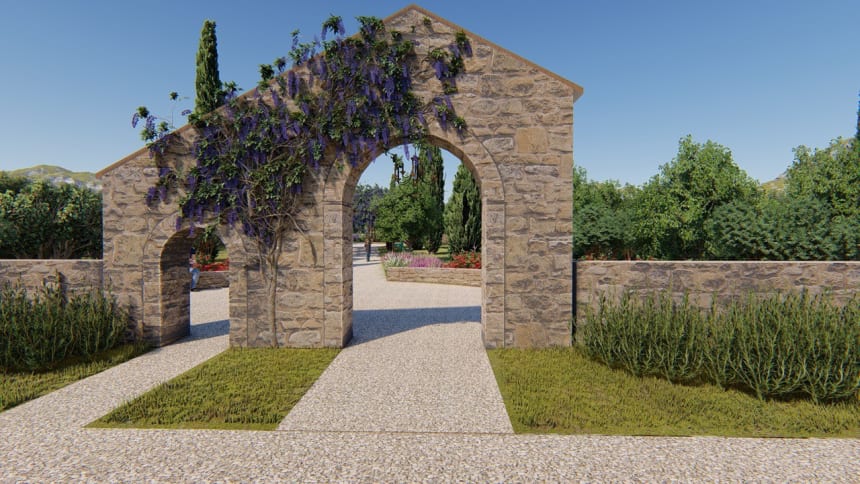
The Ideal Garden
Eco-Park in the Citrus Grove of a Peloponnese Hotel
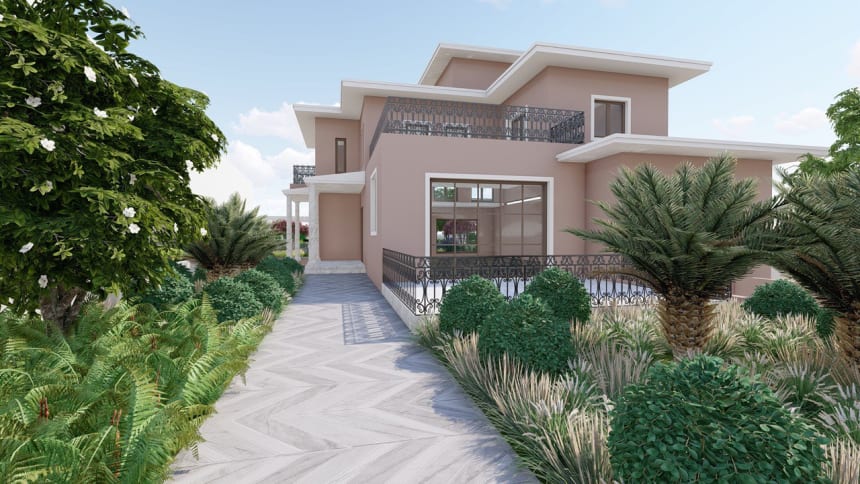
Garden Redesign
Family Garden in Glyfada

The Ideal Garden
Planting Design for a Private Boutique Hotel

Container Gardens


