Nature is best commanded by obeying her
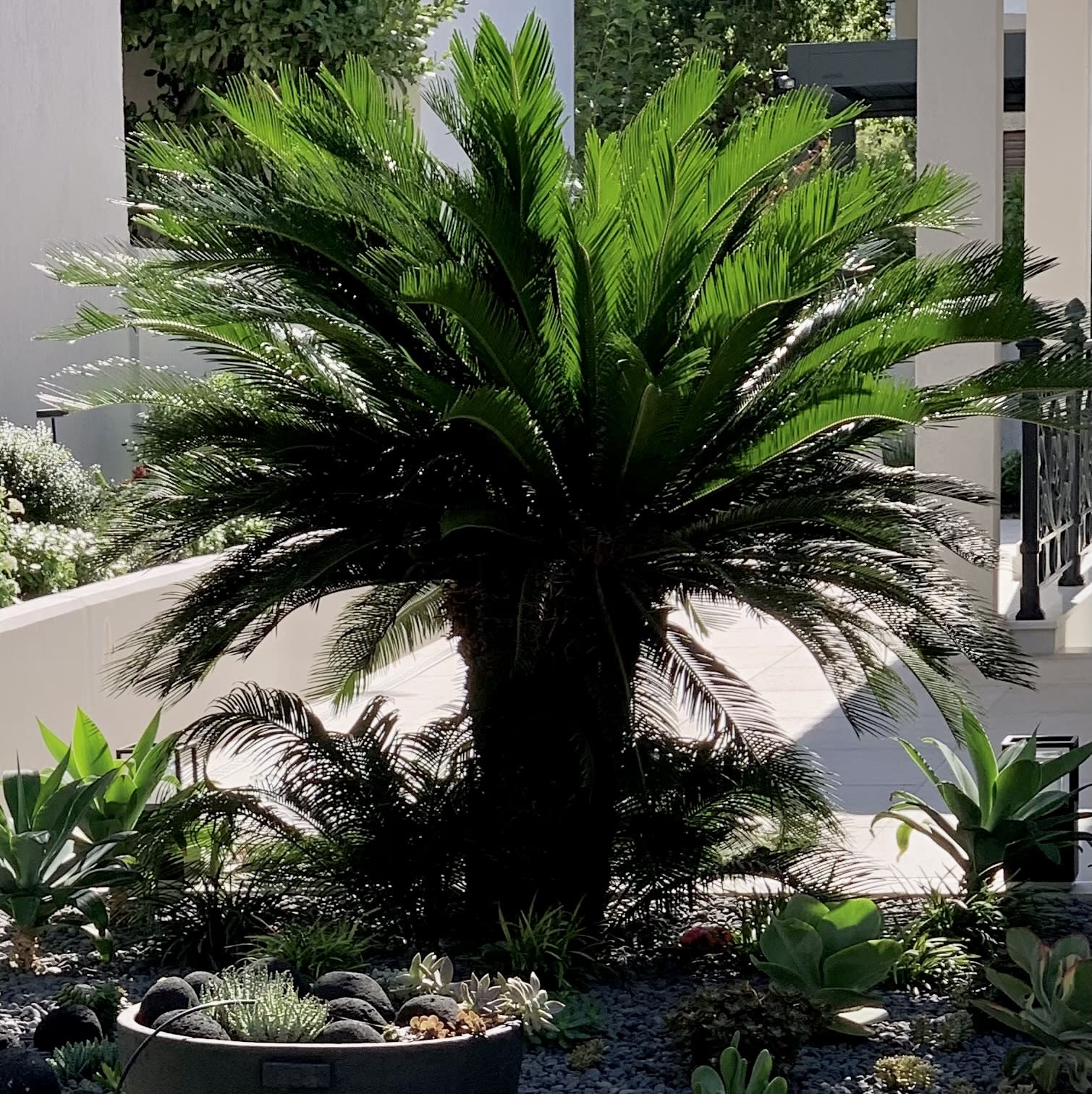
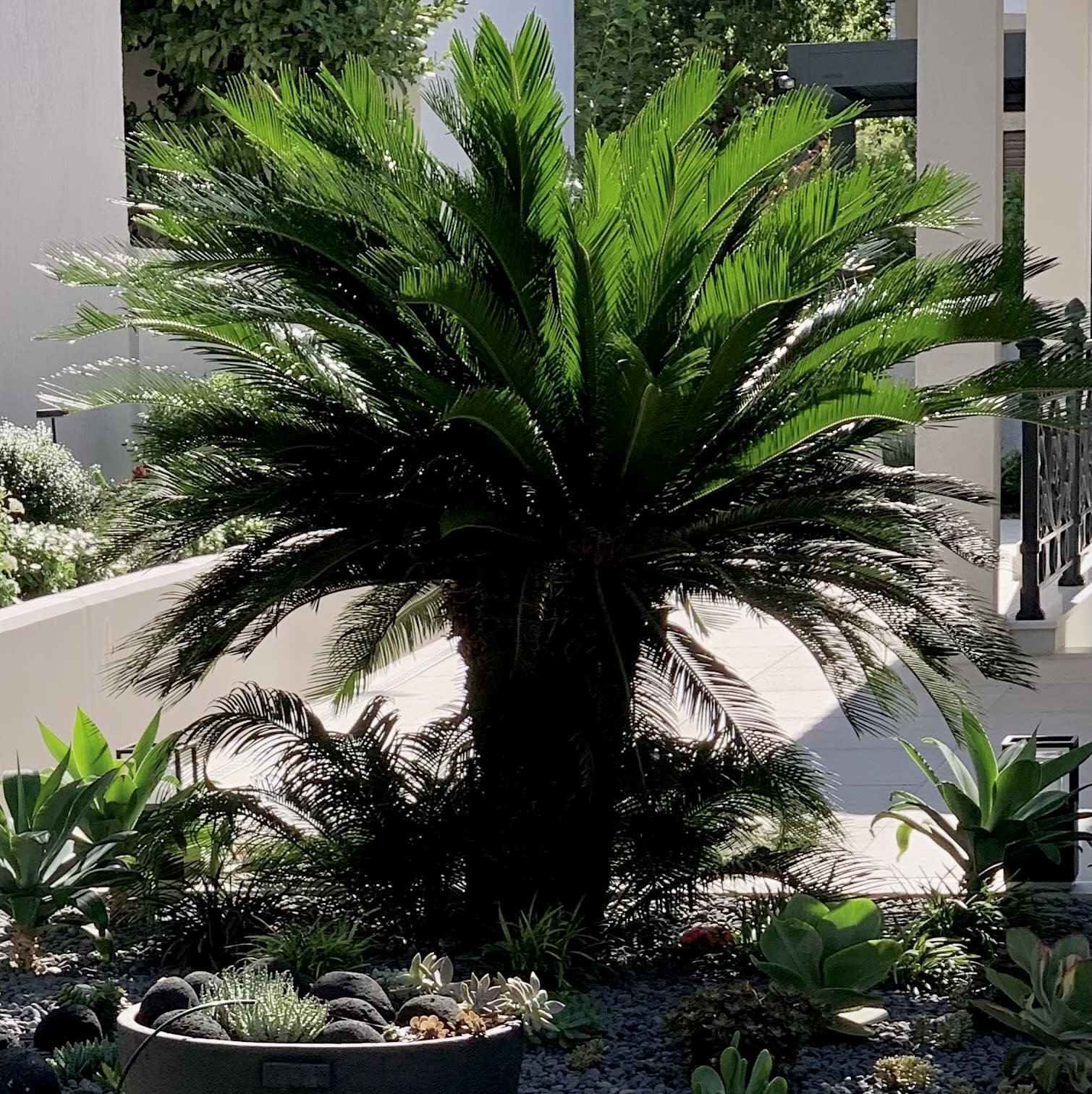
In our practice, we constantly encounter a complete misunderstanding of the cycad's nature. The most common mistake is to consider it a palm, plant it like a palm, and prune it accordingly.
The cycad is an ancient relict gymnosperm from the Paleozoic Era, completely unrelated to palms. I would like to settle this matter once and for all. A palm is a flowering plant with a distinct structure and life cycle.
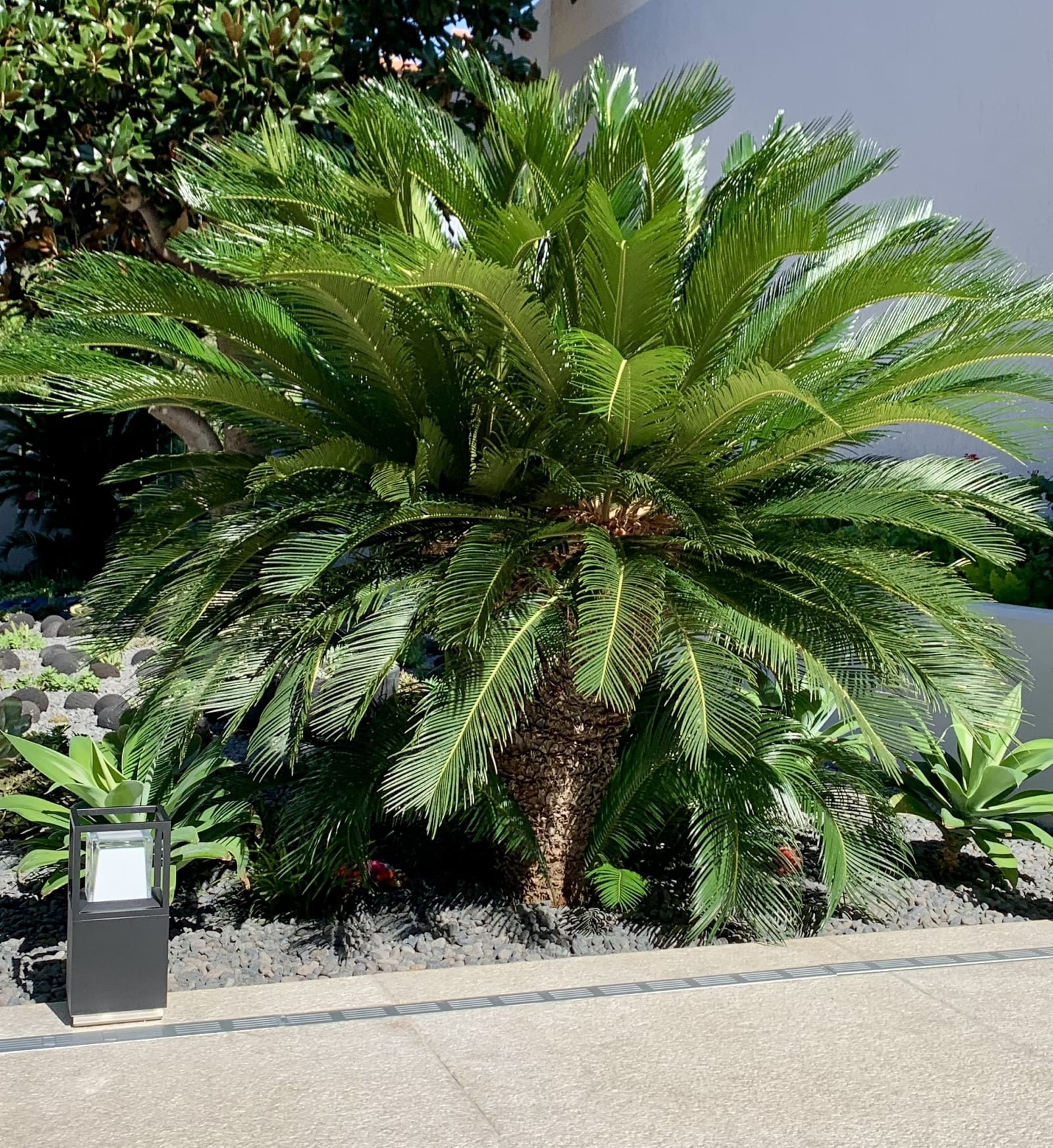
Stop endlessly pruning cycad leaves and stripping the trunks as if they were palms. The residual leaf petioles and the scales between them protect the trunk. Only leaves that have yellowed or lost their aesthetic appearance require pruning.
Cycas revoluta is the primary species of cycad used for ornamental purposes. Native to the subtropics of East Asia—a region of high humidity and heavy rainfall—it grows in the understory and shrub thickets. From this information, we can deduce the ideal conditions it requires: partial shade, regular watering, and soil enriched with organic matter.
If you know nothing about a plant, the very first thing you should do is observe how and where it grows in nature.

Yana Danyuk
Principal Designer
Yet the cycad is a highly adaptable plant that also survives on rocky coastal shores in poor soil, exposed to salt spray and strong winds. We too can harness these capabilities, while keeping in mind that its appearance will become squat, its growth slow, and its leaves short, rigid, and prone to losing their green coloration—especially under the dry conditions of Attica.
Every plant species and even cultivar has its own range of adaptation. For some, minimal environmental shifts prove fatal, while others adjust to widely varying conditions. However, one must understand that their appearance may alter as a result.
Yana Danyuk
Principal Designer

Yana Danyuk
Principal Designer of Gardeniana. She creates designer gardens in Athens and throughout Greece.


